
Why Is My Semi Truck ABS Light On?
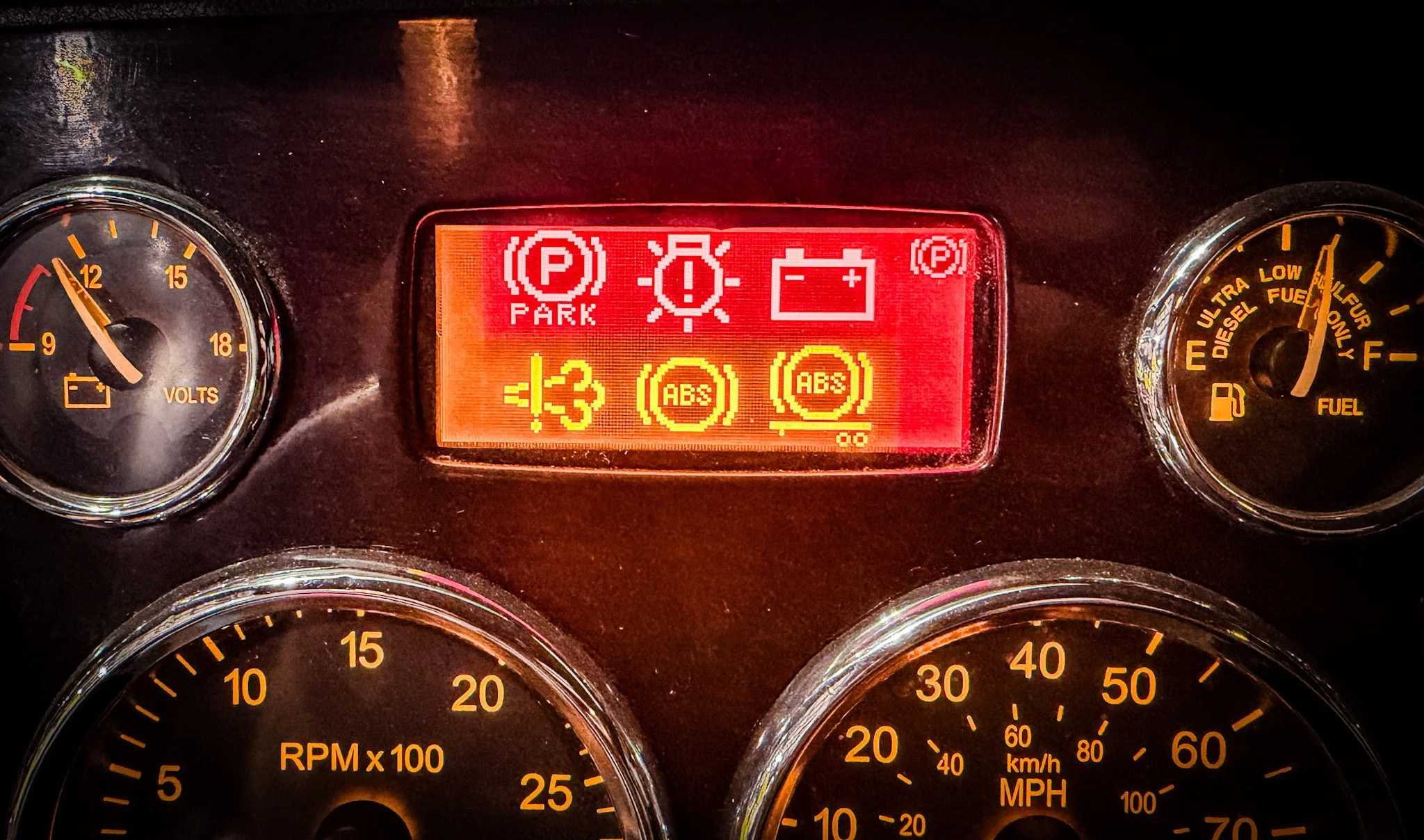
ABS lights in a semi truck
Seeing an ABS light on your dash can be unsettling, especially if the truck otherwise feels like it is braking normally. This is one of the most common questions we hear from drivers and fleet managers, and it is also one of the most searched truck issues online.
The short answer is that an ABS light means the Anti lock Braking System has detected a fault and shut itself off. The longer answer is more important, because not all ABS issues are the same, and some are far easier to fix than most drivers realize.
In this article, we will walk through why the ABS light comes on in a semi truck, whether it is safe to drive with the ABS light on, what causes the light to come on intermittently, and how to get the ABS light off a semi truck the right way.
Summary
An illuminated ABS light means the anti-lock system detected a fault and disabled itself; your service brakes still work, but you lose ABS assistance, reducing control on low-traction surfaces and risking DOT citations if ignored. The most common, easily resolved causes are wheel speed sensor contamination or gap issues, damaged wiring/connectors, and trailer electrical faults at the 7-way or pigtail. Intermittent lights typically point to wiring or connector problems and often become constant faults if not addressed. The right fix starts with basics (isolate the trailer, clean/reseat sensors, inspect wiring, check fuses) and proceeds to reading fault/blink codes or using a diagnostic tool to pinpoint the issue.
What Does the ABS Light Mean on a Semi Truck?
When the ABS light is on, the truck is telling you that the system designed to prevent wheel lock up during hard braking is no longer active. The ABS system relies on wheel speed sensors, wiring, air valves, and an electronic control module to monitor how each wheel is behaving under braking.
If the system detects unreliable data or an electrical problem, it disables itself to avoid unpredictable brake behavior.
Your service brakes will still function. You will still be able to stop the truck. What you lose is the added safety of controlled braking during panic stops or low traction conditions.
That distinction is important. An ABS fault does not mean brake failure, but it does mean reduced braking safety.
Is It Safe to Drive a Semi With the ABS Light On?
This is one of the most common questions drivers ask, and the answer depends on how you define safe.
From a mechanical standpoint, the truck will still stop. The foundation brakes are not disabled when the ABS light comes on. From a safety standpoint, the truck is no longer operating at full braking capability.
Without ABS, hard braking can cause wheel lock up. On slick pavement, gravel, snow, or wet roads, that can lead to loss of control, sliding, or jackknifing.
From a regulatory standpoint, an active ABS light is considered a DOT defect. While it may not place the truck out of service by itself, it can result in a citation during a roadside inspection. Repeated or ignored ABS issues can also raise red flags during compliance reviews.
In short, it is usually safe enough to move the truck, but it is not something that should be ignored or put off.
Why Does the ABS Light Come On in a Semi Truck?
The ABS system is constantly checking itself. It monitors wheel speed, voltage, air pressure response, and communication between components. When something does not make sense or drops out of range, the system sets a fault and turns the light on.
Most ABS problems fall into a few common categories. The good news is that the most common causes are also the easiest to fix.
What Is the Most Common Cause of the ABS Light to Come On?
By far, the most common cause of an ABS light on a semi truck is a wheel speed sensor issue.
Wheel speed sensors are mounted near the wheel hubs and read a toothed ring called a tone ring. These sensors live in a harsh environment. They are exposed to dirt, brake dust, water, grease, and road debris every mile the truck runs.
Over time, several things can happen. Debris can build up on the sensor tip. The sensor can back out slightly from vibration. The air gap between the sensor and the tone ring can become too large for a clean signal.
When that happens, the ABS module sees inconsistent wheel speed data and disables the system.
In many cases, the fix is surprisingly simple. Removing the sensor, cleaning it, and reinstalling it fully seated is enough to restore proper operation. Once the truck moves, the sensor self sets to the correct gap.
This is why wheel speed sensors should always be checked before replacing more expensive components.
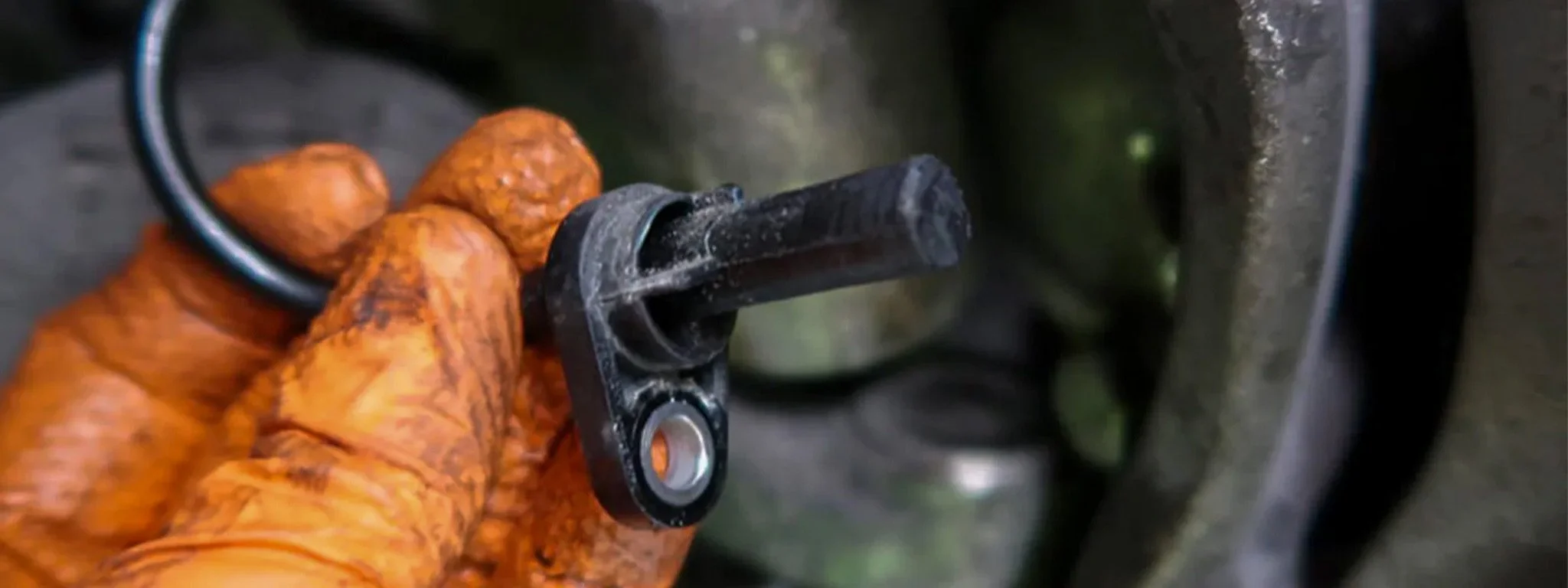
Fouled wheel speed sensor
Why Is My Semi Truck ABS Light On and Off While Driving?
An ABS light that comes on and off is usually a sign of an intermittent electrical issue.
Common causes include damaged sensor wiring, loose connectors, or wiring that rubs against suspension components or the frame. These problems often show up at highway speed or on rough roads and disappear when the truck is shut off and restarted.
Intermittent faults are easy to ignore, but they should not be. What starts as a light that flickers on and off usually turns into a constant ABS fault if left unaddressed.
Finding these issues early can prevent roadside problems and inspection failures.
Trailer Related ABS Problems
Another frequent cause of ABS lights involves the trailer rather than the tractor.
If the ABS light only comes on when a trailer is connected, the issue is very often in the trailer electrical system. Corrosion in the seven way plug, loose pins, or damaged pigtail wiring can interrupt power to the trailer ABS module.
In some cases, the trailer ABS system does not receive proper constant power and instead draws power from the brake light circuit. This can cause the ABS light to illuminate or flash every time the brakes are applied.
Cleaning the plug, inspecting the wiring, and ensuring solid electrical connections often resolves these issues.
Trailer ABS problems are one of the most common reasons drivers chase the wrong repair on the tractor side.
Other Common Reasons a Semi Truck ABS Light Comes On
While sensors and wiring account for most ABS faults, there are other causes that do show up.
Blown ABS fuses are often the result of wiring shorts. Most trucks have separate fuses for tractor ABS and trailer ABS, and both should be checked.
Damaged tone rings can also trigger ABS faults. Missing teeth, heavy corrosion, or grease contamination from a leaking wheel seal can prevent the sensor from reading correctly.
Less commonly, the issue may be a faulty ABS modulator valve or a failing electronic control unit. These components act as the muscles and brain of the system. When they fail, the light usually stays on continuously and will not clear without repairs.
How to Get the ABS Light Off a Semi Truck
The correct way to get the ABS light off is to fix the underlying problem, not to reset or ignore it.
Start with the basics. Disconnect the trailer and see if the light goes out. Inspect wheel ends for damaged wiring. Clean and reseat wheel speed sensors. Check ABS and trailer ABS fuses.
If the light remains on, the next step is diagnostics. Modern trucks store fault codes that identify which wheel or circuit is causing the problem. Many trucks allow drivers to view these codes through the dash display. Trailers may flash blink codes through the ABS indicator lamp.
A heavy duty diagnostic tool provides even more detail and allows technicians to confirm the root cause before replacing parts.

ABS fuse
Final Thoughts
ABS lights are one of the most misunderstood warning indicators on a semi truck. They rarely mean a major failure, but they always mean something needs attention.
Most ABS issues come down to sensors, wiring, or trailer electrical problems. When addressed early, they are usually simple and inexpensive to fix. When ignored, they turn into safety risks, inspection issues, and downtime.
Understanding what the ABS light means and how to approach it calmly can save drivers and fleets time, money, and frustration.
If your ABS light is on, and you are unsure whether the problem is in the tractor or trailer, a proper inspection and diagnostic check will provide clear answers and get you back on the road with confidence.
Jesse comes from a three-generation heavy-duty trucking family. From shop floors to parts counters, he now focuses on educating fleet managers and trucking professionals on heavy-duty systems.
