
Signs You Need Wheel Alignment Now for Heavy-Duty Trucks
Driving a heavy-duty truck with misaligned wheels can lead to more than just discomfort; it creates safety risks, poor fuel efficiency, and costly repairs. Misalignment can affect handling and increase wear on critical components, leading to a range of problems that can compromise both performance and safety. As a heavy-duty truck operator, understanding the signs of wheel misalignment is crucial. This article explores the key indicators that your truck needs alignment and discusses the associated maintenance costs, all while emphasizing the importance of regular checks.
Importance of Wheel Alignment
Wheel alignment for heavy-duty trucks, including popular models like Kenworth, Peterbilt, and Volvo, involves adjusting the angles of the wheels according to the manufacturer’s specifications. Proper alignment is essential for several reasons:
Handling: Misaligned wheels can lead to poor handling, making it difficult to steer and control the vehicle, especially in emergency situations. This can be particularly dangerous given the size and weight of heavy-duty trucks.
Tire Wear: Incorrect alignment causes uneven tire wear, which can lead to premature tire replacement. Properly aligned wheels ensure that your tires wear evenly, extending their lifespan and reducing overall costs.
Fuel Efficiency: Misalignment can create additional rolling resistance, which forces your engine to work harder, thereby reducing fuel efficiency. Proper alignment helps achieve optimal fuel economy, which is crucial for the profitability of your trucking operation. According to the Federal Motor Carrier Safety Administration (FMCSA), misalignment can reduce fuel efficiency by 2–3% due to increased rolling resistance.
The ATA Technology & Maintenance Council (TMC) reports that proper alignment can save fleets more than $1,000 per truck per year in combined tire and fuel expenses.
Key Signs of Misalignment
Recognizing the signs of wheel misalignment early can save you from costly repairs down the road. Here are the key indicators to watch for:
Uneven Tire Wear: Check for signs of uneven tread wear. If one side of the tire appears worn more than the other, this indicates an alignment issue. Look out for bald patches, cupping, or feathering on the tread. According to Bridgestone’s commercial tire division, irregular wear patterns like these can shorten steer tire life by 20–50% depending on the severity. Michelin’s truck tire technical guide also notes that feather wear and diagonal wear are among the earliest warning signs of misalignment and suspension issues.
Pulling to One Side: If your truck consistently drifts or pulls to one side while driving straight, it may need alignment. This can make long drives uncomfortable and may affect safety by risking loss of control.
Vibrating Steering Wheel: If you notice vibration in the steering wheel, especially at higher speeds, this often signals misalignment. Vibration can also indicate that your tires are unbalanced or damaged.
A steering wheel that sits off-center when driving straight is a common sign of misalignment. You may find yourself continually correcting the wheel just to keep the truck in its lane, which can lead to driver fatigue. Modern trucks also use steering-angle sensors to detect the exact position of the wheel, and anytime an off-center wheel is corrected, those sensors typically need to be recalibrated after the alignment. Choosing a shop equipped to handle both the alignment and the sensor calibration is essential, which is why drivers rely on The Service Company to do it correctly.
Squealing Tires: If you hear a squealing noise while turning, it may point to misaligned wheels. This noise occurs because the tires are straining to grip the road, causing excessive friction.
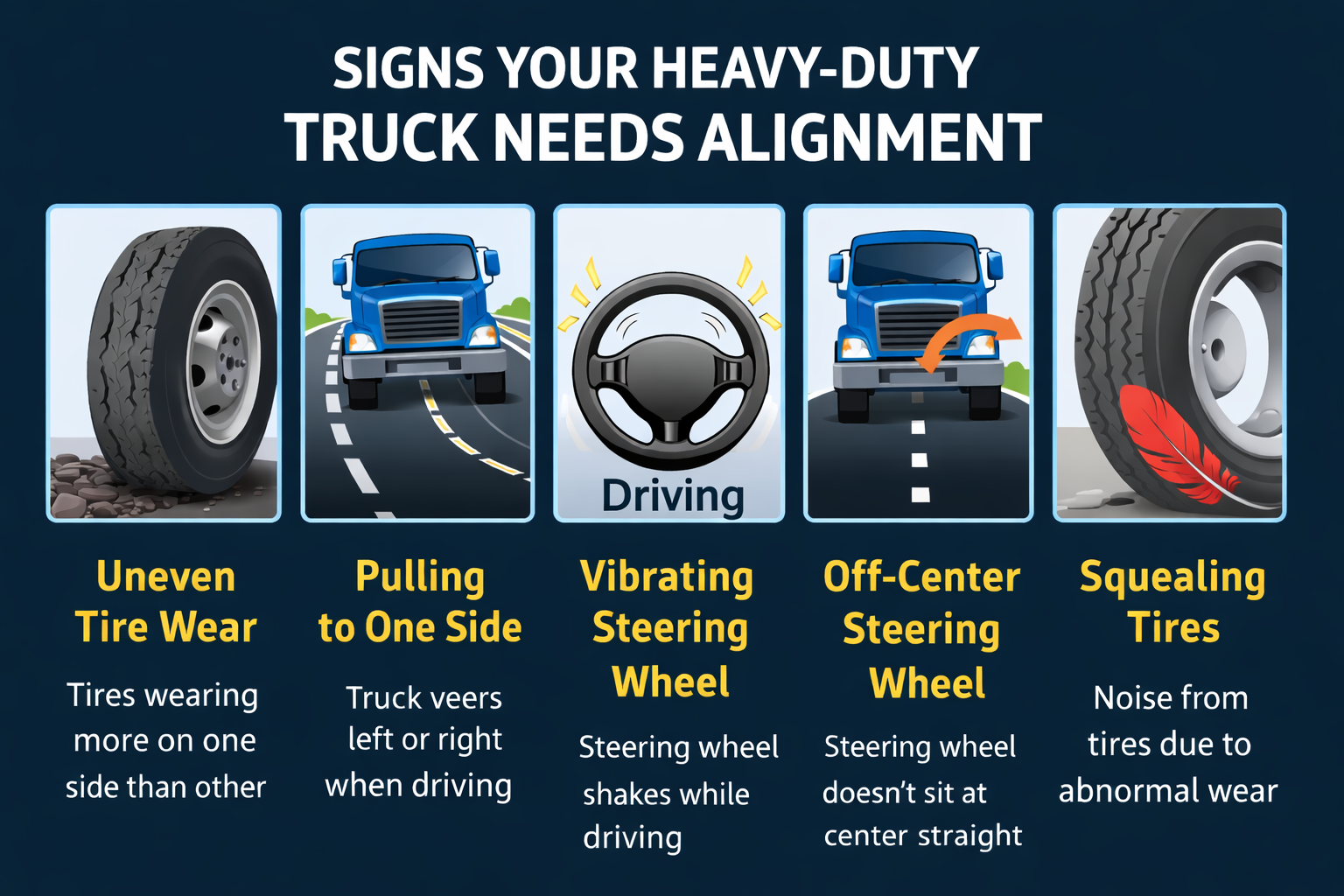
Signs you need alignment
Common Tire Wear Patterns and What They Indicate
Irregular tire wear is one of the most reliable indicators of alignment, suspension, or mechanical issues on heavy-duty trucks. Understanding these patterns allows operators and maintenance teams to diagnose problems early and prevent unnecessary downtime and expense.
One-Sided Wear
Appearance: Tread wear concentrated heavily on one shoulder of the tire.
Likely Cause: Camber misalignment, toe misalignment, or axles that are not running parallel.
Professional Insight: Bridgestone identifies one-sided wear as the most frequent alignment-related pattern in commercial steer tires, often signaling the need for a full alignment and suspension evaluation.
Shoulder Step Wear
Appearance: Noticeable high and low spots on either the inner or outer shoulder rib.
Likely Cause: Common on slow-wearing radial tires, and may be influenced by load distribution or minor structural inconsistencies.
Professional Insight: While sometimes cosmetic, it can indicate developing shock or bushing wear if it progresses.
River (Erosion) Wear
Appearance: Channel-like troughs along the edges of the tread ribs.
Likely Cause: Typically found on free-rolling radial tires in steer or trailer positions, often related to slight toe conditions.
Professional Insight: Early detection allows operators to rotate tires before wear accelerates
Feather Wear
Appearance: Tread blocks feel sharp on one side and smooth on the other when you run your hand across the tire.
Likely Cause: Excessive toe settings or thrust-angle compensation from the drive axles.
Professional Insight: Michelin lists feather wear as one of the strongest early warning signs of toe-related misalignment.
Diagonal Wear
Appearance: Diagonal wear patches that repeat around the circumference of the tire.
Likely Cause: Radial run out, misalignment, imbalance, or worn steering components.
Professional Insight: When found on steer tires, it typically points toward a combination of mechanical and alignment faults.
Depression Wear (Center or Shoulder)
Appearance: Localized concave recesses that appear either in the center ribs or along the shoulders.
Likely Cause: Chronic underinflation or overinflation, worn shocks, loose wheel bearings, or mounting irregularities.
Professional Insight: Depression wear is often tied to maintenance practices and can be corrected before significant tread is lost.
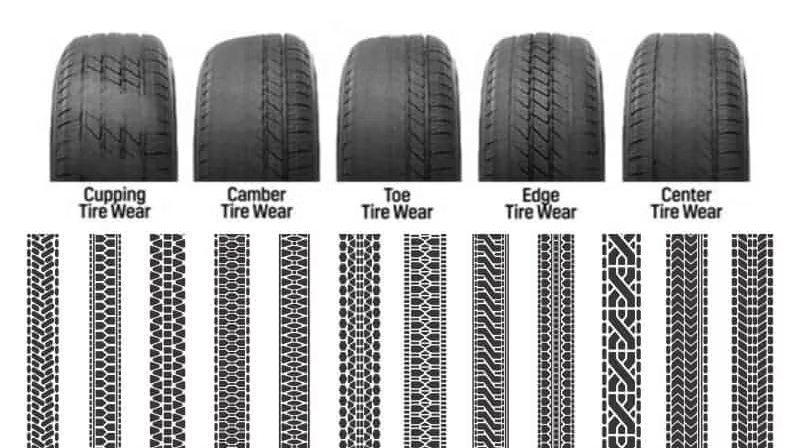
Different tread wear patterns on semi truck tires
Why Equipment Matters
Precision alignment requires more than visual checks. Modern trucks require digital accuracy to properly set toe, camber, caster, and thrust angles.
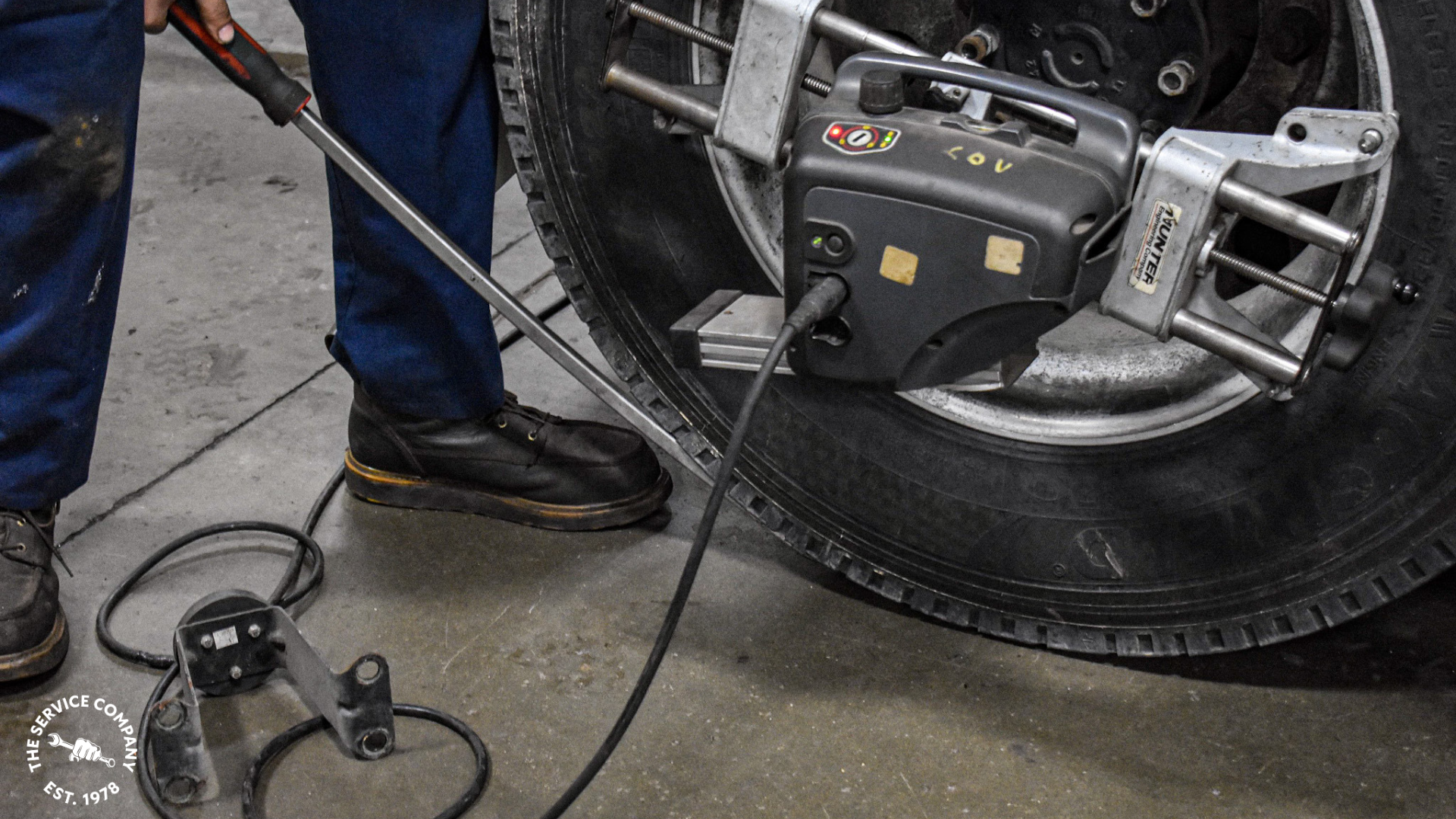
At The Service Company, our Hunter alignment systems measure all axle and wheel positions to the tenth of a degree, ensuring longer tire life, better fuel efficiency, and OEM-level accuracy on every alignment.
Why Alignment Matters for Heavy-Duty Trucks
Maintaining proper wheel alignment is essential for the overall health of your heavy-duty truck. It not only enhances driving comfort but also plays a critical role in the following areas:
Safety: Proper alignment contributes to safe handling and stability, especially while driving at high speeds or on uneven road surfaces. Good alignment helps prevent accidents caused by control loss.
Cost Savings: Regular alignment checks help avoid premature tire replacements and expensive suspension repairs. Fixing alignment issues early can save you money over time and minimize downtime for your vehicle.
Vehicle Longevity: Keeping your truck’s wheels aligned prolongs the life of its suspension system and tires. This enhances the truck's performance, ensuring reliable service for many years.
Costs of Alignment
Heavy-duty truck alignment typically costs between $200 and $300, depending on various factors such as the vehicle type, location, and service provider.
Type of Vehicle: Larger and more complex trucks may require more labor and time for alignment adjustments.
Location: Prices can vary based on the local market. Urban centers may have higher costs compared to rural areas.
Service Provider: Different shops may have varying prices. It's essential to choose a service provider that specializes in heavy-duty vehicles for precise alignments.
Recommended Frequency for Checks
To keep your heavy-duty truck running smoothly, it is advisable to check your truck's alignment every six months. Additionally, you should inspect alignment after significant driving events, such as hitting a pothole, or after making changes to the suspension or steering systems. Taking proactive measures ensures your truck remains in optimal condition, improving safety and performance.
Finding an Alignment Shop
When seeking a reputable alignment shop for heavy-duty trucks, consider the following tips:
Research: Look for specialized alignment shops with experience in heavy-duty trucks. An experienced technician will be familiar with the unique requirements of trucks like Kenworth, Peterbilt, and Volvo.
Online Reviews: Utilize online platforms to read customer reviews and ratings of local shops. This can help you identify trustworthy service providers.
Ask for Recommendations: Reach out to fellow drivers or companies that operate heavy-duty fleets for personal recommendations on alignment shops.
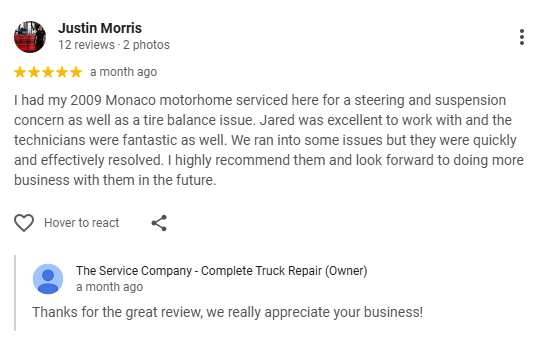
Good reviews related to alignment
Conclusion
Regular wheel alignment checks are vital for maintaining your heavy-duty truck's safety, comfort, and efficiency. By recognizing the signs of misalignment and acting promptly, you can enhance vehicle performance and save on maintenance costs. Remember, investing in proper alignment not only benefits your truck but also contributes to the safety of yourself and others on the road. Stay ahead of wear, breakdowns, and downtime with professional wheel alignment and preventive care from The Service Company, proudly serving Covington, Greenville, Dayton, Springfield, and Columbus, Ohio.
Share Your Experience!
Have you faced wheel alignment issues with your heavy-duty truck? We'd love to hear your tips and experiences! Send us a message on one of our social media platforms, or comment on a post and engage with our community of truck operators.
